Showing posts with label Okinba Launko. Show all posts

Thursday, 13 July 2023

The Moon and Me by Femi Osofisan (Okinba Launko)

By the women knitting slow songs
into their washing

by the lovers spraying the water
with whispered words

by the shy birds lending their voices
from the purdah of sleepy branches

by the hoes hiding from the weariness
of men returned from the farm

softly
on the sand
the moon
spreads his mat for the children to sit on.

Femi Osofisan (Okinba Launko)
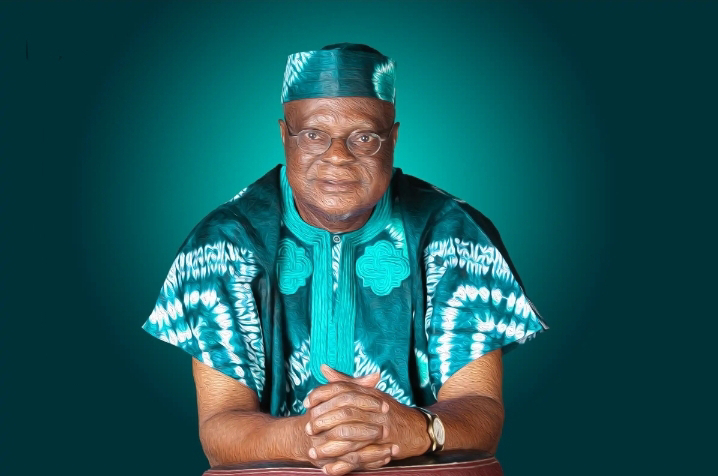
Babafemi Adeyemi Osofisan is a Nigerian professor and writer born on June 16, 1946 in Ogun State, Nigeria, who is well-known for his literary works that criticize societal issues and incorporate African traditional performances and surrealism in some of his plays. His plays often revolve around the struggle between good and evil. He is a didactic writer who aims to rectify the decaying state of society through his works. Additionally, he has written poetry under the pen name Okinba Launko.

Monday, 10 July 2023

End of the War by Femi Osofisan (Okinba Launko)

They say,
a war only ends,
when another war begins:
the silence of the battlefield
heralds the widow’s anguish

For, to set questions
is not as hard as finding answers….

Our war has ended
because war is now with us

The deserted houses, the fallen rafters
breed the city’s slums
and the praise singers are not dead
they have only gone to the barracks ….
the butchers fill the parliaments ….
and the victims no longer die by bullets
but survive to pay the levies

Listen ___ they will tell you ___
to beat drums is mere children’s play
the adult’s is to start echoes ….

Femi Osofisan (Okinba Launko)

Babafemi Adeyemi Osofisan is a Nigerian professor and writer born on June 16, 1946 in Ogun State, Nigeria, who is well-known for his literary works that criticize societal issues and incorporate African traditional performances and surrealism in some of his plays. His plays often revolve around the struggle between good and evil. He is a didactic writer who aims to rectify the decaying state of society through his works. Additionally, he has written poetry under the pen name Okinba Launko.

Saturday, 8 July 2023

Longing by Femi Osofisan (Okinba Launko)

Life roars on, of course
elsewhere, as I rise and open the door.

And there is a moon, outside,
shining gently, as if afraid to be heard

It will not tell me of your whereabouts,
the moon does not believe that I miss you

and so, in the florescence of my office,
sitting alone with my poem,
I am alone and do not hear you pass

I miss your steps in the corridor of
the century, and the friends are fewer daily
to confide in, except this poem

Except this song that will not be sung.

Femi Osofisan (Okinba Launko)
Babafemi Adeyemi Osofisan is a Nigerian professor and writer born on June 16, 1946 in Ogun State, Nigeria, who is well-known for his literary works that criticize societal issues and incorporate African traditional performances and surrealism in some of his plays. His plays often revolve around the struggle between good and evil. He is a didactic writer who aims to rectify the decaying state of society through his works. Additionally, he has written poetry under the pen name Okinba Launko.
Thursday, 6 July 2023

Wild Things by Femi Osofisan

(for Baroness Blixen)

ONE

Beautiful
& very touching

a lady fell in love with Africa
& made it a porcelain of her youth
scripting her adventurous life
into the yielding loom of the forests

lavish, breath-taking landscape

& always, in the background—
huge shadows—
walk the owners of the land
tamed
unlike the royal elephants
unlike the buffaloes
the numerous birds—
tamed
to serve the white lady
with their ever grinning teeth

TWO

The beautiful film is a hymn to wild things

to the white lady, refusing to bend to the male
commandments of colonial rule
or to the diktat of husband
in the conscripting laws of English marriage
or the shame of venereal disease
near fatal
always holding her head high

holding firm
even after the capricious betrayal of a safari lover
(who has to die later in a plane crash
so as to further test her dignity)

apt too, that in the end, the film tells us
that lions camp over the lover’s grave
(in tribute)
he who had always hunted them
paying homage to the kindred spirit
of this wild stranger in a wild land
even if he hunted and killed them

THREE

Oh all the beautiful things are wild
The lions as well as the unending plains
The water that will not be damned
But must return to Mombassa
The woman that will defy her womanhood
To pursue her husband into the very face of war
(& bring death back with her, in her vagina)
who would raise coffee beans
on highland, against the tested
(but obviously foolish) wisdom
of the native Kikuyus—

FOUR

Yes, Kikuyus, my Africans
not even a note for you in the lady’s last lament—
her poem is for the land forsaken
her two closest Africans being the boy
she healed of sores and taught to cook
(and then left behind)
and the faithful houseboy
so obviously lost
in a love that if spoken
would have begotten a scandal

FIVE

She left—and never came back, we’re told—
(what’s left to return to?)
This beautiful lady
who caught so much of the poetry
of Africa
and schooled the natives so well
in the art of bending
that many decades afterwards
after she and her countrymen have departed
black colonials now rule in Kikuyuland
served by bending servants,
black men armed with the same whips
well cut for black flesh
with the same half-literate cooks
decorating their kitchens, and
with the same mute lips, taught that
to speak of the love of freedom
is to be chased into the wilderness
or to shallow graves unknown to loving lions
unknown to the songs of today’s other
Blixens…

SIX

Yes, all the beautiful things are untamed

The beautiful life of a woman is
a paean, untamed,
to the goddess of wildness
& abandon in a wild colonial land

Some lives are as free and fierce as the lore of lions
(some lives, armed with guns…)

so fierce the film
so fierce and shattering
surging in ancient truths on the love of a woman

like the resurgence of ancient myth

the vast landscape
reminding us of Africa’s beauty
(especially where the natives have not been
trespassing)
& of Africa’s loss…

SEVEN

But why despair?
we’ve always been in the background
in the wild adventures of their books

Films such as this prolong the pain:
but do not despair—

We haven’t the means ourselves to show our lives
at their stark & grandiose moments:
but the day will come—

Moments when we are alone by ourselves
& are just being beautiful, by ourselves…
but the day will come—

No weapons of our own to show our pure sufferings
those moments when our faces are not just masks
but sensitive skins & tender voices:

Moments when our wounds bleed blood, red like
others, red like all blood…
but the day will come—

Ase, Edumare…

EIGHT

Here in Limoges
I mourn Africa

I mourn myself
in the mirror of strangers

I feel pain on behalf of all of us
who have remained nameless across the ages
like a vague and formless ghost
in the mirror of our guests

the shadow
against which the white man defines himself

NINE

Yes—our land is beautiful
even if, as they say,
we are mere receptacles of history

onlookers, who carry the bags
while the white men tame our lions
& our land…

That is the story they tell us
& our children:
but the day will come—

when Okinba will no longer
be mourning,
& history will be awake in our hands,

oh the day will come—

when Okinba will be singing
in his own voice

oh the day will come—

telling our own stories
singing our own songs.

Femi Osofisan 
Babafemi Adeyemi Osofisan is a Nigerian professor and writer born on June 16, 1946 in Ogun State, Nigeria, who is well-known for his literary works that criticize societal issues and incorporate African traditional performances and surrealism in some of his plays. His plays often revolve around the struggle between good and evil. He is a didactic writer who aims to rectify the decaying state of society through his works. Additionally, he has written poetry under the pen name Okinba Launko.

Tuesday, 4 July 2023

Paris Latin Quarter by Femi Osofisan (Okinba Launko)

Sweet Marie-Anne, she thought
Being French, intellectual and brunette

Entitled her, in any Parisian cafe
To prompt service—and she was

Probably right, (as the Policeman
Later confirmed)—always provided

The situation was normal, and
She herself did not let the race down.

So that afternoon, she said to me:
“Sit by me, mon cheri, and order

A drink!”—Well! The waiter came
As was his duty, only to stand aghast

At the unspeakable scandal of a
Full-blooded French woman kissing

This merde of a black man openly and
Full on the lips!—Purebred son of

The Galls, his first impulse
Was to smash his tray at the black head

And shriek out for help to the army of riot
Police permanently stationed on the streets

Of the Latin Quarter…—But
He was a non-violent man, and besides,

He had the customer’s tip to think of.
So he turned to me, swallowing hard, and

With controlled French politeness, he said:
“M’sieur, please sit OPPOSITE the lady—

“Yes, with the sacre table between you, face
To face—Or mon cul, dammit, I shall
Not serve you!”—And I was still wiping off
Her lipstick, wondering what to do, when my lady

Spoke, her face red with indignation: “But
You’re mistaken! This one’s not like the rest,

“Can’t you see! He’s a bon sauvage, and has
Written such brilliant essays in impeccable French

“On the phallus of—pardon, the merits of Negritude!
Show him my dear!” she turned to me, “Show how well

“You quote Molière, Corneille, and—”But the waiter
Was already smiling and bowing:I had passed my test.

Femi Osofisan (Okinba Launko)
Babafemi Adeyemi Osofisan is a Nigerian professor and writer born on June 16, 1946 in Ogun State, Nigeria, who is well-known for his literary works that criticize societal issues and incorporate African traditional performances and surrealism in some of his plays. His plays often revolve around the struggle between good and evil. He is a didactic writer who aims to rectify the decaying state of society through his works. Additionally, he has written poetry under the pen name Okinba Launko.

Wednesday, 14 June 2023

Awakening by Femi Osofisan (Okinba Launko)

Rise.

Take your dream to the end of the street.

Then stretch the street.

Take it to the end of your dream.


Femi Osofisan (Okinba Launko)
Babafemi Adeyemi Osofisan is a Nigerian professor and writer born on June 16, 1946 in Ogun State, Nigeria, who is well-known for his literary works that criticize societal issues and incorporate African traditional performances and surrealism in some of his plays. His plays often revolve around the struggle between good and evil. He is a didactic writer who aims to rectify the decaying state of society through his works. Additionally, he has written poetry under the pen name Okinba Launko.

So I Went Seeking by Femi Osofisan (Okinba Launko)

So I went seeking
In the forest of the world

I went to the lion who roared and said
Come closer now, I’m hungry

I asked the elephant
Who picked me with his enormous
Trunk, and dropped me in a nowhere land

I asked the antelope
Who could not wait to answer—
But from what was he running so?

I asked the birds,
Starting with the peacock
Who merely laughed with a spread of wings

The tortoise kindly left word
That he’d gone to a feast
With his brother the politician out of jail

And I wore the length
Of the morning, walked the whole noon
Till I was worn, and it was dusk,

And so it was only
In the evening, far in the moonlight’s arms
That I found you, my

Lovely dream.

Femi Osofisan (Okinba Launko)
Babafemi Adeyemi Osofisan is a Nigerian professor and writer born on June 16, 1946 in Ogun State, Nigeria, who is well-known for his literary works that criticize societal issues and incorporate African traditional performances and surrealism in some of his plays. His plays often revolve around the struggle between good and evil. He is a didactic writer who aims to rectify the decaying state of society through his works. Additionally, he has written poetry under the pen name Okinba Launko.

Release, a poem by Femi Osofisan (Okinba Launko)

Iwapele, release me
it is time to offer my pollen to the wind

When the once-sacred shrines fill with vulgar masks
& the sibilating chorus of sycophants usurp the air

When Ogun’s hammer swings in desecrated hands
& wanton carnage spreads in the forge, to cowed applause

When the acid lips of falsehood lick the newspapers
& amidst the spittle, one swims alone

When the fists of power throttle the daily headlines
& amidst the babble, one strains alone

(& we all have our numerous reasons for silence:
we can stand by a furnace and shun the heat pleading that we are deaf to the bellows:
we can stand at peace by a grinding saw with the excuse that it is only morning yet, that we have not begun to chisel ourselves out nor shape the contours of our rage…)

Release me:
in my belly is the foetus of a struggling scream
I wait, tottering, on the horizon of slogans

Release me, the road is waiting…

Femi Osofisan (Okinba Launko)
Babafemi Adeyemi Osofisan is a Nigerian professor and writer born on June 16, 1946 in Ogun State, Nigeria, who is well-known for his literary works that criticize societal issues and incorporate African traditional performances and surrealism in some of his plays. His plays often revolve around the struggle between good and evil. He is a didactic writer who aims to rectify the decaying state of society through his works. Additionally, he has written poetry under the pen name Okinba Launko.

For Anita Roddick, a poem by Ken Saro-Wiwa

For Anita Roddick Had I a voice I would sing your song Had I a tongue I would speak your praise Had I the time I would live for you But here...