Thursday, 8 October 2026

Full Summary and Analysis of Night by Wole Soyinka: WAEC, NECO and JAMB Recommended Poem.

Here is the video presentation of the complete summary and analysis of the poem, "Night" by Wole Soyinka.

In this analysis you will learn:
About the poet
Setting of the Poem
Summary of the Poem 
Stanza-by-Stanza Analysis and Interpretation of the Poem
Themes of the Poem
Literary Devices Used in the Poem


Night by Wole Soyinka

Your hand is heavy, Night, upon my brow.
I bear no heart mercuric like the clouds, to dare.
Exacerbation from your subtle plough.

Woman as a clam, on the sea's cresent.
I saw your jealous eye quench the sea's
Flouorescence, dance on the pulse incessant

Of the waves. And I stood, drained
Submitting like the sands, blood and brine
Coursing to the roots. Night, you rained

Serrated shadows through dank leaves
Till, bathed in warm suffusion of your dappled cells
  Sensations pained me, faceless, silent as night thieves.

Hide me now, when night children haunt the earth
I must hear none! These misted cells will yet
Undo me; naked, unbidden, at Night's muted birth.

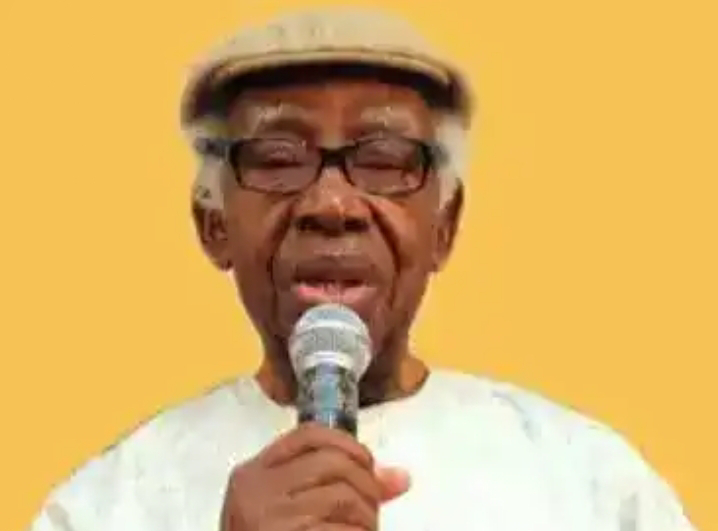
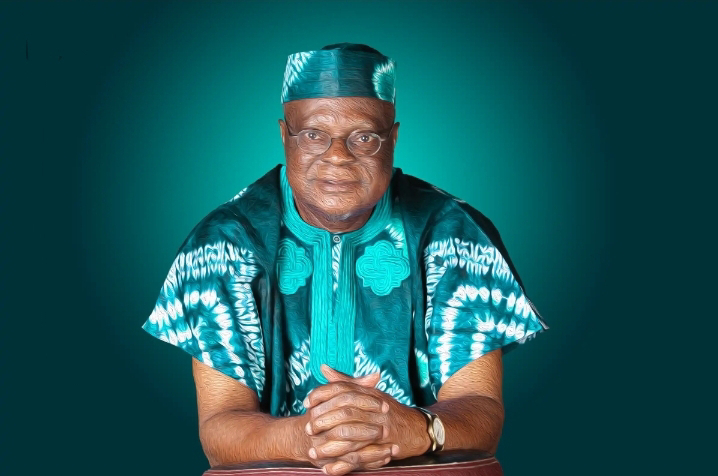
Wole Soyinka is one the most honoured African poets. He is a playwright, poet, lecturer and an activist. He was awarded the Nobel prize in Literature in 1986 being the African to be so honoured. Wole Soyinka was born on 13 July, 1934.

Monday, 5 October 2026

A Sudden Storm by Pius Oleghe

The wind howls, the trees sway,
The loose house tops sheets clatter and clang,
The open window shuts with a bang,
And the sky makes night of day

Helter-skelter the parents run
Pressed with a thousand minor cares,
‘Hey you there! Pack the household wares
And where on earth’s my son?’

Home skip the little children.
‘Where have you been you naughty boy?’
The child feels nothing but joy,
For he loves the approach of the rain

The streets clear, the houses fill,
The noise gathers as children shout,
To rival the ranging wind without,
And nought that can move is still

A bright flash! Alighted plain;
Then from the once blue heaven,
Accompanied by noise that deafens,
Steadily pours the rain

Pius Oleghe

Saturday, 21 February 2026

For Anita Roddick, a poem by Ken Saro-Wiwa

For Anita Roddick

Had I a voice
I would sing your song
Had I a tongue
I would speak your praise
Had I the time
I would live for you
But here, gagged and bound
To the ioor and injustice
And waiting for death
I can only wonder
How you have breathed life
Into the thought that we give
Meaning to being
Only when we share and care.

Ken Saro-Wiwa 
Ken Saro-Wiwa (full name: Kenule Beeson Saro-Wiwa) was a Nigerian writer, television producer and activist, born in October 10th 1941 in Bori near Port Harcourt in Nigeria. Saro-Wiwa spoke against the country's military regime and Royal Dutch/Shell for the destruction of the environment of the Ogoni people, in his hometown of Rivers state. He was executed on November 10th 1995 in Port Harcourt after being tried by a special military tribunal for allegedly orchestrating the murder of Ogoni chiefs in a pro-government meeting. Subsequently, he was hanged by the military dictator of Nigeria, General Sani Abacha. This act of injustice aroused international outrage and led to Nigeria's suspension from the Commonwealth of Nations for more than three years.

I lie Alone at Night, a poem by Ken Saro-Wiwa

I Lie Alone at Night 

I lie alone at night
And think all of one year’s gone
Since I held you in my arms
In the bed we know so well.

I lie alone at night
And see the callous bandits
Break into our hallowed bedroom
Cruelly knife our togetherness.

I lie alone at night
And think of you lying lonely
Dreaming of my return
To the home we love so well

I lie alone at night
And think of the thick boots
Which stalk the halls of tyranny
And crush us underfoot.

I lie alone at night
And wonder why you wait
And endure the gripping pain
Which is my lot to bear.

I lie alone at night
And think of the stranger moon
The stars beyond my gaze
Your beauty like moons and stars

I lie alone at night
And pray the day will come
To mend your broken heart
And steel my breaking soul.

I lie alone at night
And dream a great new dawn
Without boots and knives
Broken hearts, breaking souls
Empty dreams and lonely beds
Stranger moons and searing pain
When you and I and all of us
Can hold hands and sing our love
Into a night captured by peace.

Ken Saro-Wiwa 
Ken Saro-Wiwa (full name: Kenule Beeson Saro-Wiwa) was a Nigerian writer, television producer and activist, born in October 10th 1941 in Bori near Port Harcourt in Nigeria. Saro-Wiwa spoke against the country's military regime and Royal Dutch/Shell for the destruction of the environment of the Ogoni people, in his hometown of Rivers state. He was executed on November 10th 1995 in Port Harcourt after being tried by a special military tribunal for allegedly orchestrating the murder of Ogoni chiefs in a pro-government meeting. Subsequently, he was hanged by the military dictator of Nigeria, General Sani Abacha. This act of injustice aroused international outrage and led to Nigeria's suspension from the Commonwealth of Nations for more than three years.

Wishes by Adelere Victor

Wishes

Many must have wished
To possess the ability of a bird
To fly and sail through oceans with wings
To overcome the cheat of time
And to champion the sky

Many must have wished
To become mighty and dreadful like elephant
To intimidate others with great power
And to have many people as servants

Many must have wished
To possess the fierceness of lion
To wield great powers
And to lord it over nations 

Many must have wished
To become beautiful and elegant like peacock
To display pulchritude with great pride
And to oppress others with elegance

Indeed, wishes give essence to life
A solid reason to continue living
Fuels that keep the mind going
And air that aids the existence of humanity
But it must remain unpolluted by wickedness
And it must be free from covetousness
It mustn't prove hazardous to others 

(c)  Adelere Victor

Thursday, 7 November 2024

The Land of Unease by Niyi Osundare

The Land of Unease

The land never knows peace
Where a few have too much
And many none at all.

The yam of this world
Is enough for all mouths
Which pay daily homage
To the god of the throat
Enough for the aged
Awaiting day's dusk
And the young peeping 
At tomorrow 
From mother's back.

Niyi Osundare

Niyi Osundare was born in 1947 in Ikere-Ekiti, Nigeria. He is a prolific writer and highly valued literary critic. In December 2014, Osundare was awarded the Nigerian National Merit Award (NNMA) for academic excellence.

Sunday, 8 September 2024

The Leader and the Led, a poem by Niyi Osundare

THE LEADER AND THE LED

The Lion stakes his claim
To the leadership of the pack

But the Antelopes remember
The ferocious pounce of his paws

The hyena says the crown is made for him
But the Impalas shudder at his lethal appetite

The Giraffe craves a place in the front
But his eyes are too far from the ground

When the Zebra says it’s his right to lead
The pack points to the duplicity of his stripes

The Elephant trudges into the power tussle
But its colleagues dread his trampling feet

The warthog is too ugly
The rhino too riotous

And the pack thrashes around
Like a snake without a head

“Our need calls for a hybrid of habits”,
Proclaims the Forest Sage,

“A little bit of a Lion
A little bit of a Lamb

Tough like a tiger, compassionate like a doe
Transparent like a river, mysterious like a lake

A leader who knows how to follow
Followers mindful of their right to lead”

Niyi Osundare was born in 1947 in Ikere-Ekiti, Nigeria. He is a prolific writer and highly valued literary critic. In December 2014, Osundare was awarded the Nigerian National Merit Award (NNMA) for academic excellence.


Monday, 5 February 2024

The Celebrants, a poem by Ken Saro-Wiwa

The Celebrants

They are met once again
To beat drums of confusion
Tattooes of mediocrity
They are met once again
The new cow to lead
To the cyclic slaughterhouse
Where the blood of the last
Yet stinks to skies
Awash with the stench
Of decay and corruption.

So they come and go
Bad dreams, phantoms
In the morning mist
Meteors of a dark sky
Offal at the desecrated shrine
Still they come and go

We welcome them from rooftops
Raucous at each approach
And departure, praise-singing now
Cursing loudly later
Impious votaries of an alien sect
At whom damnation shrieks with wild delight.

Ken Saro-Wiwa 
Ken Saro-Wiwa (full name: Kenule Beeson Saro-Wiwa) was a Nigerian writer, television producer and activist, born in October 10th 1941 in Bori near Port Harcourt in Nigeria. Saro-Wiwa spoke against the country's military regime and Royal Dutch/Shell for the destruction of the environment of the Ogoni people, in his hometown of Rivers state. He was executed on November 10th 1995 in Port Harcourt after being tried by a special military tribunal for allegedly orchestrating the murder of Ogoni chiefs in a pro-government meeting. Subsequently, he was hanged by the military dictator of Nigeria, General Sani Abacha. This act of injustice aroused international outrage and led to Nigeria's suspension from the Commonwealth of Nations for more than three years.

Fire, a poem by Ken Saro-Wiwa

Fire

There is a fire in me
Burns all night and day
Flares at injustice
Leaps at oppression
Glows warmly in beauty.

Ken Saro-Wiwa 
Ken Saro-Wiwa (full name: Kenule Beeson Saro-Wiwa) was a Nigerian writer, television producer and activist, born in October 10th 1941 in Bori near Port Harcourt in Nigeria. Saro-Wiwa spoke against the country's military regime and Royal Dutch/Shell for the destruction of the environment of the Ogoni people, in his hometown of Rivers state. He was executed on November 10th 1995 in Port Harcourt after being tried by a special military tribunal for allegedly orchestrating the murder of Ogoni chiefs in a pro-government meeting. Subsequently, he was hanged by the military dictator of Nigeria, General Sani Abacha. This act of injustice aroused international outrage and led to Nigeria's suspension from the Commonwealth of Nations for more than three years.

Tuesday, 24 October 2023

Once Upon a Time by Gabriel Okara

Once Upon a Time

Once upon a time, son,
they used to laugh with their hearts
and laugh with their eyes:
but now they only laugh with their teeth,
while their ice-block-cold eyes
search behind my shadow.

There was a time indeed
they used to shake hands with their hearts:
but that’s gone, son.
Now they shake hands without hearts:
while their left hands search
my empty pockets.

‘Feel at home’! ‘Come again’:
they say, and when I come
again and feel
at home, once, twice,
there will be no thrice –
for then I find doors shut on me.

So I have learned many things, son.
I have learned to wear many faces
like dresses - homeface,
officeface, streetface, hostface,
cocktailface, with all their conforming smiles
like a fixed portrait smile.

And I have learned too
to laugh with only my teeth
and shake hands without my heart.
I have also learned to say, ‘Goodbye’,
when I mean ‘Good-riddance’;
to say ‘ Glad to meet you’,
without being glad; and to say ‘It’s been
nice talking to you’, after being bored.

But believe me, son.
I want to be what I used to be
when I was like you. I want
to unlearn all these muting things.
Most of all, I want to relearn
how to laugh, for my laugh in the mirror
shows only my teeth like a snake’s bare fangs !

So show me, son,
how to laugh; show me how
I used to laugh and smile
once upon a time when I was like you.

Gabriel Okara

Gabriel Imomotimi Okara was born on 25th April, 1921 in Bomoundi in Bayelsa State, Nigeria . In 1979, he was awarded the Commonwealth Poetry.

Thursday, 13 July 2023

The Moon and Me by Femi Osofisan (Okinba Launko)

By the women knitting slow songs
into their washing

by the lovers spraying the water
with whispered words

by the shy birds lending their voices
from the purdah of sleepy branches

by the hoes hiding from the weariness
of men returned from the farm

softly
on the sand
the moon
spreads his mat for the children to sit on.

Femi Osofisan (Okinba Launko)
Babafemi Adeyemi Osofisan is a Nigerian professor and writer born on June 16, 1946 in Ogun State, Nigeria, who is well-known for his literary works that criticize societal issues and incorporate African traditional performances and surrealism in some of his plays. His plays often revolve around the struggle between good and evil. He is a didactic writer who aims to rectify the decaying state of society through his works. Additionally, he has written poetry under the pen name Okinba Launko.

Monday, 10 July 2023

End of the War by Femi Osofisan (Okinba Launko)

They say,
a war only ends,
when another war begins:
the silence of the battlefield
heralds the widow’s anguish

For, to set questions
is not as hard as finding answers….

Our war has ended
because war is now with us

The deserted houses, the fallen rafters
breed the city’s slums
and the praise singers are not dead
they have only gone to the barracks ….
the butchers fill the parliaments ….
and the victims no longer die by bullets
but survive to pay the levies

Listen ___ they will tell you ___
to beat drums is mere children’s play
the adult’s is to start echoes ….

Femi Osofisan (Okinba Launko)

Babafemi Adeyemi Osofisan is a Nigerian professor and writer born on June 16, 1946 in Ogun State, Nigeria, who is well-known for his literary works that criticize societal issues and incorporate African traditional performances and surrealism in some of his plays. His plays often revolve around the struggle between good and evil. He is a didactic writer who aims to rectify the decaying state of society through his works. Additionally, he has written poetry under the pen name Okinba Launko.

Saturday, 8 July 2023

Dedication from Moremi, a poem by Wole Soyinka

Dedication from Moremi

Earth will not share the rafter's envy; dung floors
Break, not the gecko's slight skin, but its fall
Taste this soil for death and plumb her deep for life

As this yam, wholly earthed, yet a living tuber
To the warmth of waters, earthed as springs
As roots of baobab, as the hearth.

The air will not deny you. Like a top
Spin you on the navel of the storm, for the hoe
That roots the forests plows a path for squirrels.

Be ageless as dark peat, but only that rain's
Fingers, not the feet of men, may wash you over.
Long wear the sun's shadow; run naked to the night.

Peppers green and red—child—your tongue arch
To scorpion tail, spit straight return to danger's threats
Yet coo with the brown pigeon, tendril dew between your lips.

Shield you like the flesh of palms, skyward held
Cuspids in thorn nesting, in sealed as the heart of kernel—
A woman's flesh is oil—child, palm oil on your tongue

Is suppleness to life, and wine of this gourd
From self-same timeless run of runnels as refill
Your pod lings, child, weaned from yours we embrace

Earth's honeyed milk, wine of the only rib.
Now roll your tongue in honey till your cheeks are
Swarming honeycombs—your world needs sweetening, child.

  Cam woodround the heart, chalk for flight
Of blemish—see? it dawns!—antimony beneath
Armpits like a goddess, and leave this taste

Long on your lips, of salt, that you may seek
None from tears. This, rain-water, is the gift
Of gods—drink of its purity, bear fruits in season.

Fruits then to your lips: haste to repay
The debt of birth. Yield man-tides like the sea
And ebbing, leave a meaning of the fossil led sands.

Wole Soyinka 
Wole Soyinka is one the most honoured African poets. He is a playwright, poet, lecturer and an activist. He was awarded the Nobel prize in Literature in 1986 being the African to be so honoured. Wole Soyinka was born on 13 July, 1934.

Procession I - Hanging Day, a poem by Wole Soyinka

Procession I - Hanging Day

Hanging day.
A hollow earth
Echoes footsteps of the grave procession.
Walls in sunspots
Lean to shadow of the shortening morn.

Behind an eyepatch lushly blue.
The wall of prayer has taken refuge
In a piece of blindness, closed.
Its grey recessive deeps.
Fretful limbs.

And glances that would sometimes
Conjure up a drawbridge
Raised but never lowered between
Their gathering and my sway.

Withdraw, as all the living world
Belie their absence in a feel of eyes
Barred and secret in the empty home.
Of shuttered windows, I know the heart.
Has journeyed far from present.

Tread. Drop. Dread Drop. Dead.

What may I tell you? What reveal?
I who before them peered unseen
Who stood one-legged on the untrodden
Verge- lest I should not return.

That I received them? That I wheeled above and flew beneath them.
And brought him on his way.
And came to mine, even to the edge
Of the unspeakable encirclement?
What may I tell you of the five
Bell-ringers on the ropes to chimes.
Of silence?
What tell you of rigors of the law?
From watchtowers on stunned walls.
Raised to stay a siege of darkness
What whisper to their football thunders.
Vanishing to shrouds of sunlight?

Let not man speak of justice, guilt
Far away, blood-stained in their
Tens of thousands, hands that damned.
These wretches to the pit triumph
But here, alone the solitary deed.

Wole Soyinka 
Wole Soyinka is one the most honoured African poets. He is a playwright, poet, lecturer and an activist. He was awarded the Nobel prize in Literature in 1986 being the African to be so honoured. Wole Soyinka was born on 13 July, 1934.

Telephone Conversation, a poem by Wole Soyinka

Telephone Conversation

The price seemed reasonable, location
Indifferent. The landlady swore she lived
Off premises. Nothing remained
But self-confession. ‘Madam,’ I warned,
‘I hate a wasted journey—I am African.’
Silence. Silenced transmission of
Pressurised good-breeding. Voice, when it came,
Lipstick coated, long gold-rolled
Cigarette-holder pipped. Caught I was, foully.

‘HOW DARK ?’... I had not misheard... ‘ARE YOU LIGHT
OR VERY DARK ?’ Button B. Button A. Stench
Of rancid breath of public hide-and-speak.
Red booth. Red pillar-box. Red double-tiered
Omnibus squelching tar. It was real! Shamed
By ill-mannered silence, surrender
Pushed dumbfounded to beg simplification.
Considerate she was, varying the emphasis—
‘ARE YOU DARK? OR VERY LIGHT?’ Revelation came.
‘You mean—like plain or milk chocolate?’

Her assent was clinical, crushing in its light
Impersonality. Rapidly, wave-length adjusted,
I chose. ‘West African sepia’—and as afterthought,
“down in my passport." Silence for spectroscopic
Flight of fancy, till truthfulness changed her accent
Hard on the mouthpiece. ‘WHAT’S THAT?’ conceding
‘DON’T KNOW WHAT THAT IS.’ ‘Like brunette.’
‘THAT’S DARK, ISN’T IT?’ ‘Not altogether.
Facially, I am brunette, but madam, you should see
The rest of me. Palm of my hand, soles of my feet

Are a peroxide blonde. Friction, caused—
Foolishly madam—by sitting down, has turned
My bottom raven black—One moment madam!’—sensing
Her receiver rearing on the thunderclap
About my ears—‘Madam,’ I pleaded, ‘wouldn’t you rather
See for yourself?’

Wole Soyinka 
Wole Soyinka is one the most honoured African poets. He is a playwright, poet, lecturer and an activist. He was awarded the Nobel prize in Literature in 1986 being the African to be so honoured. Wole Soyinka was born on 13 July, 1934.

Asewo, a poem by Mamman Vatsa

Asewo

Butu, butu, Cameroon insect.
Man wey no wan scratch him body
make e no look you for face
Like Cameroon man dey say,
butu, butu na our country ting

Mamman Vatsa
Mamman Jiya Vatsa (OFR) was born on December 3rd, 1940. He was a General in Nigerian Army and a poet. He was a member of the Supreme Military Council. Mamman Vasta was a lover of literature; he assisted the Children's Literature Association of Nigeria with funds and built a Writer's Village for the Association of Nigerian Authors. It is also noted that he hosed their annual conferences. The Writer's Village was named in his honour in January, 2013. He was executed by the military regime of General Ibrahim Babangida (his childhood friend) on 5th of March 1986 after he was convicted for treason in connection with an unsuccessful coup.

Longing by Femi Osofisan (Okinba Launko)

Life roars on, of course
elsewhere, as I rise and open the door.

And there is a moon, outside,
shining gently, as if afraid to be heard

It will not tell me of your whereabouts,
the moon does not believe that I miss you

and so, in the florescence of my office,
sitting alone with my poem,
I am alone and do not hear you pass

I miss your steps in the corridor of
the century, and the friends are fewer daily
to confide in, except this poem

Except this song that will not be sung.

Femi Osofisan (Okinba Launko)
Babafemi Adeyemi Osofisan is a Nigerian professor and writer born on June 16, 1946 in Ogun State, Nigeria, who is well-known for his literary works that criticize societal issues and incorporate African traditional performances and surrealism in some of his plays. His plays often revolve around the struggle between good and evil. He is a didactic writer who aims to rectify the decaying state of society through his works. Additionally, he has written poetry under the pen name Okinba Launko.

Thursday, 6 July 2023

Wild Things by Femi Osofisan

(for Baroness Blixen)

ONE

Beautiful
& very touching

a lady fell in love with Africa
& made it a porcelain of her youth
scripting her adventurous life
into the yielding loom of the forests

lavish, breath-taking landscape

& always, in the background—
huge shadows—
walk the owners of the land
tamed
unlike the royal elephants
unlike the buffaloes
the numerous birds—
tamed
to serve the white lady
with their ever grinning teeth

TWO

The beautiful film is a hymn to wild things

to the white lady, refusing to bend to the male
commandments of colonial rule
or to the diktat of husband
in the conscripting laws of English marriage
or the shame of venereal disease
near fatal
always holding her head high

holding firm
even after the capricious betrayal of a safari lover
(who has to die later in a plane crash
so as to further test her dignity)

apt too, that in the end, the film tells us
that lions camp over the lover’s grave
(in tribute)
he who had always hunted them
paying homage to the kindred spirit
of this wild stranger in a wild land
even if he hunted and killed them

THREE

Oh all the beautiful things are wild
The lions as well as the unending plains
The water that will not be damned
But must return to Mombassa
The woman that will defy her womanhood
To pursue her husband into the very face of war
(& bring death back with her, in her vagina)
who would raise coffee beans
on highland, against the tested
(but obviously foolish) wisdom
of the native Kikuyus—

FOUR

Yes, Kikuyus, my Africans
not even a note for you in the lady’s last lament—
her poem is for the land forsaken
her two closest Africans being the boy
she healed of sores and taught to cook
(and then left behind)
and the faithful houseboy
so obviously lost
in a love that if spoken
would have begotten a scandal

FIVE

She left—and never came back, we’re told—
(what’s left to return to?)
This beautiful lady
who caught so much of the poetry
of Africa
and schooled the natives so well
in the art of bending
that many decades afterwards
after she and her countrymen have departed
black colonials now rule in Kikuyuland
served by bending servants,
black men armed with the same whips
well cut for black flesh
with the same half-literate cooks
decorating their kitchens, and
with the same mute lips, taught that
to speak of the love of freedom
is to be chased into the wilderness
or to shallow graves unknown to loving lions
unknown to the songs of today’s other
Blixens…

SIX

Yes, all the beautiful things are untamed

The beautiful life of a woman is
a paean, untamed,
to the goddess of wildness
& abandon in a wild colonial land

Some lives are as free and fierce as the lore of lions
(some lives, armed with guns…)

so fierce the film
so fierce and shattering
surging in ancient truths on the love of a woman

like the resurgence of ancient myth

the vast landscape
reminding us of Africa’s beauty
(especially where the natives have not been
trespassing)
& of Africa’s loss…

SEVEN

But why despair?
we’ve always been in the background
in the wild adventures of their books

Films such as this prolong the pain:
but do not despair—

We haven’t the means ourselves to show our lives
at their stark & grandiose moments:
but the day will come—

Moments when we are alone by ourselves
& are just being beautiful, by ourselves…
but the day will come—

No weapons of our own to show our pure sufferings
those moments when our faces are not just masks
but sensitive skins & tender voices:

Moments when our wounds bleed blood, red like
others, red like all blood…
but the day will come—

Ase, Edumare…

EIGHT

Here in Limoges
I mourn Africa

I mourn myself
in the mirror of strangers

I feel pain on behalf of all of us
who have remained nameless across the ages
like a vague and formless ghost
in the mirror of our guests

the shadow
against which the white man defines himself

NINE

Yes—our land is beautiful
even if, as they say,
we are mere receptacles of history

onlookers, who carry the bags
while the white men tame our lions
& our land…

That is the story they tell us
& our children:
but the day will come—

when Okinba will no longer
be mourning,
& history will be awake in our hands,

oh the day will come—

when Okinba will be singing
in his own voice

oh the day will come—

telling our own stories
singing our own songs.

Femi Osofisan 
Babafemi Adeyemi Osofisan is a Nigerian professor and writer born on June 16, 1946 in Ogun State, Nigeria, who is well-known for his literary works that criticize societal issues and incorporate African traditional performances and surrealism in some of his plays. His plays often revolve around the struggle between good and evil. He is a didactic writer who aims to rectify the decaying state of society through his works. Additionally, he has written poetry under the pen name Okinba Launko.

Wednesday, 5 July 2023

Yamankoro, a poem by Mamman Vatsa

Yamankoro

Big like Cameroon coco yam.
If you wan dry am,
Make you buy alum
Look man wey dey hungry Dey throw way better meal.

*Yamankoro – Snail

Mamman Vatsa 
Mamman Jiya Vatsa (OFR) was born on December 3rd, 1940. He was a General in Nigerian Army and a poet. He was a member of the Supreme Military Council. Mamman Vasta was a lover of literature; he assisted the Children's Literature Association of Nigeria with funds and built a Writer's Village for the Association of Nigerian Authors. It is also noted that he hosed their annual conferences. The Writer's Village was named in his honour in January, 2013. He was executed by the military regime of General Ibrahim Babangida (his childhood friend) on 5th of March 1986 after he was convicted for treason in connection with an unsuccessful coup.

Full Summary and Analysis of Night by Wole Soyinka: WAEC, NECO and JAMB Recommended Poem.

Here is the video presentation of the complete summary and analysis of the poem, " Night " by Wole Soyinka. In this analysis you w...