Tuesday, 24 October 2023

Once Upon a Time by Gabriel Okara

Once Upon a Time

Once upon a time, son,
they used to laugh with their hearts
and laugh with their eyes:
but now they only laugh with their teeth,
while their ice-block-cold eyes
search behind my shadow.

There was a time indeed
they used to shake hands with their hearts:
but that’s gone, son.
Now they shake hands without hearts:
while their left hands search
my empty pockets.

‘Feel at home’! ‘Come again’:
they say, and when I come
again and feel
at home, once, twice,
there will be no thrice –
for then I find doors shut on me.

So I have learned many things, son.
I have learned to wear many faces
like dresses - homeface,
officeface, streetface, hostface,
cocktailface, with all their conforming smiles
like a fixed portrait smile.

And I have learned too
to laugh with only my teeth
and shake hands without my heart.
I have also learned to say, ‘Goodbye’,
when I mean ‘Good-riddance’;
to say ‘ Glad to meet you’,
without being glad; and to say ‘It’s been
nice talking to you’, after being bored.

But believe me, son.
I want to be what I used to be
when I was like you. I want
to unlearn all these muting things.
Most of all, I want to relearn
how to laugh, for my laugh in the mirror
shows only my teeth like a snake’s bare fangs !

So show me, son,
how to laugh; show me how
I used to laugh and smile
once upon a time when I was like you.

Gabriel Okara
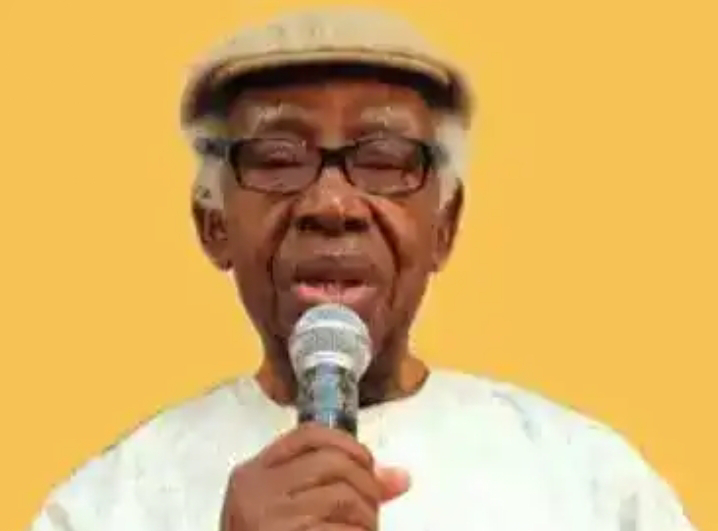
Gabriel Imomotimi Okara was born on 25th April, 1921 in Bomoundi in Bayelsa State, Nigeria . In 1979, he was awarded the Commonwealth Poetry.

Thursday, 13 July 2023

The Moon and Me by Femi Osofisan (Okinba Launko)

By the women knitting slow songs
into their washing

by the lovers spraying the water
with whispered words

by the shy birds lending their voices
from the purdah of sleepy branches

by the hoes hiding from the weariness
of men returned from the farm

softly
on the sand
the moon
spreads his mat for the children to sit on.

Femi Osofisan (Okinba Launko)
Babafemi Adeyemi Osofisan is a Nigerian professor and writer born on June 16, 1946 in Ogun State, Nigeria, who is well-known for his literary works that criticize societal issues and incorporate African traditional performances and surrealism in some of his plays. His plays often revolve around the struggle between good and evil. He is a didactic writer who aims to rectify the decaying state of society through his works. Additionally, he has written poetry under the pen name Okinba Launko.

Monday, 10 July 2023

End of the War by Femi Osofisan (Okinba Launko)

They say,
a war only ends,
when another war begins:
the silence of the battlefield
heralds the widow’s anguish

For, to set questions
is not as hard as finding answers….

Our war has ended
because war is now with us

The deserted houses, the fallen rafters
breed the city’s slums
and the praise singers are not dead
they have only gone to the barracks ….
the butchers fill the parliaments ….
and the victims no longer die by bullets
but survive to pay the levies

Listen ___ they will tell you ___
to beat drums is mere children’s play
the adult’s is to start echoes ….

Femi Osofisan (Okinba Launko)

Babafemi Adeyemi Osofisan is a Nigerian professor and writer born on June 16, 1946 in Ogun State, Nigeria, who is well-known for his literary works that criticize societal issues and incorporate African traditional performances and surrealism in some of his plays. His plays often revolve around the struggle between good and evil. He is a didactic writer who aims to rectify the decaying state of society through his works. Additionally, he has written poetry under the pen name Okinba Launko.

Saturday, 8 July 2023

Dedication from Moremi, a poem by Wole Soyinka

Dedication from Moremi

Earth will not share the rafter's envy; dung floors
Break, not the gecko's slight skin, but its fall
Taste this soil for death and plumb her deep for life

As this yam, wholly earthed, yet a living tuber
To the warmth of waters, earthed as springs
As roots of baobab, as the hearth.

The air will not deny you. Like a top
Spin you on the navel of the storm, for the hoe
That roots the forests plows a path for squirrels.

Be ageless as dark peat, but only that rain's
Fingers, not the feet of men, may wash you over.
Long wear the sun's shadow; run naked to the night.

Peppers green and red—child—your tongue arch
To scorpion tail, spit straight return to danger's threats
Yet coo with the brown pigeon, tendril dew between your lips.

Shield you like the flesh of palms, skyward held
Cuspids in thorn nesting, in sealed as the heart of kernel—
A woman's flesh is oil—child, palm oil on your tongue

Is suppleness to life, and wine of this gourd
From self-same timeless run of runnels as refill
Your pod lings, child, weaned from yours we embrace

Earth's honeyed milk, wine of the only rib.
Now roll your tongue in honey till your cheeks are
Swarming honeycombs—your world needs sweetening, child.

  Cam woodround the heart, chalk for flight
Of blemish—see? it dawns!—antimony beneath
Armpits like a goddess, and leave this taste

Long on your lips, of salt, that you may seek
None from tears. This, rain-water, is the gift
Of gods—drink of its purity, bear fruits in season.

Fruits then to your lips: haste to repay
The debt of birth. Yield man-tides like the sea
And ebbing, leave a meaning of the fossil led sands.

Wole Soyinka 
Wole Soyinka is one the most honoured African poets. He is a playwright, poet, lecturer and an activist. He was awarded the Nobel prize in Literature in 1986 being the African to be so honoured. Wole Soyinka was born on 13 July, 1934.

Procession I - Hanging Day, a poem by Wole Soyinka

Procession I - Hanging Day

Hanging day.
A hollow earth
Echoes footsteps of the grave procession.
Walls in sunspots
Lean to shadow of the shortening morn.

Behind an eyepatch lushly blue.
The wall of prayer has taken refuge
In a piece of blindness, closed.
Its grey recessive deeps.
Fretful limbs.

And glances that would sometimes
Conjure up a drawbridge
Raised but never lowered between
Their gathering and my sway.

Withdraw, as all the living world
Belie their absence in a feel of eyes
Barred and secret in the empty home.
Of shuttered windows, I know the heart.
Has journeyed far from present.

Tread. Drop. Dread Drop. Dead.

What may I tell you? What reveal?
I who before them peered unseen
Who stood one-legged on the untrodden
Verge- lest I should not return.

That I received them? That I wheeled above and flew beneath them.
And brought him on his way.
And came to mine, even to the edge
Of the unspeakable encirclement?
What may I tell you of the five
Bell-ringers on the ropes to chimes.
Of silence?
What tell you of rigors of the law?
From watchtowers on stunned walls.
Raised to stay a siege of darkness
What whisper to their football thunders.
Vanishing to shrouds of sunlight?

Let not man speak of justice, guilt
Far away, blood-stained in their
Tens of thousands, hands that damned.
These wretches to the pit triumph
But here, alone the solitary deed.

Wole Soyinka 
Wole Soyinka is one the most honoured African poets. He is a playwright, poet, lecturer and an activist. He was awarded the Nobel prize in Literature in 1986 being the African to be so honoured. Wole Soyinka was born on 13 July, 1934.

Full Summary and Analysis of Night by Wole Soyinka: WAEC, NECO and JAMB Recommended Poem.

Here is the video presentation of the complete summary and analysis of the poem, " Night " by Wole Soyinka. In this analysis you w...